
What Is Die Cutting?
How Duraweld Uses It in Manufacturing
If a product has a shaped edge, curved corner, cut-out or a fold that goes beyond a simple square or rectangle, there is a good chance that die cutting has been involved somewhere in its manufacture.
Die cutting is a production process used to cut sheet materials quickly, accurately and consistently to a defined shape. At Duraweld, it is used across polypropylene, card and board products where straight guillotine cuts alone cannot achieve the required profile, openings or fold lines.
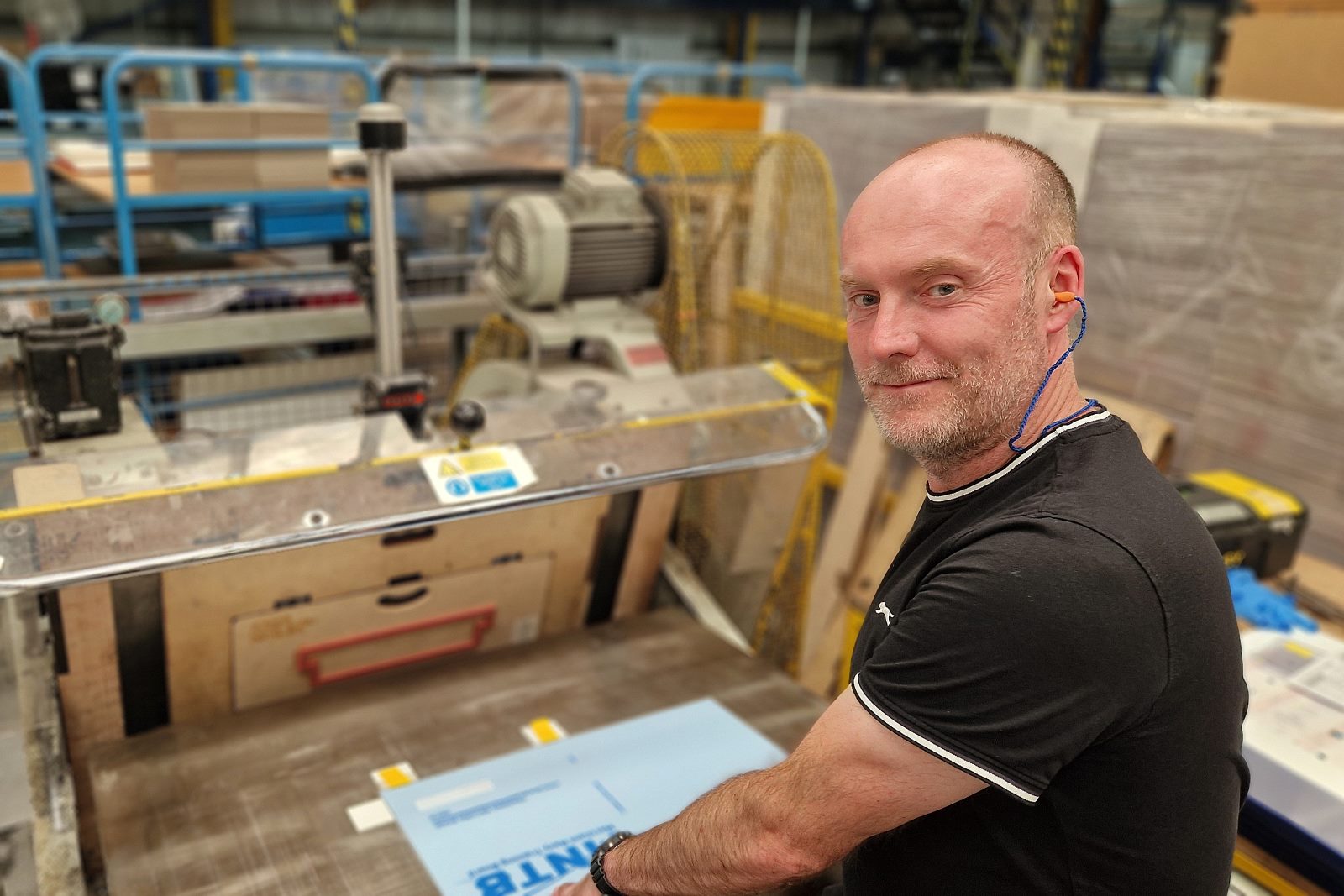
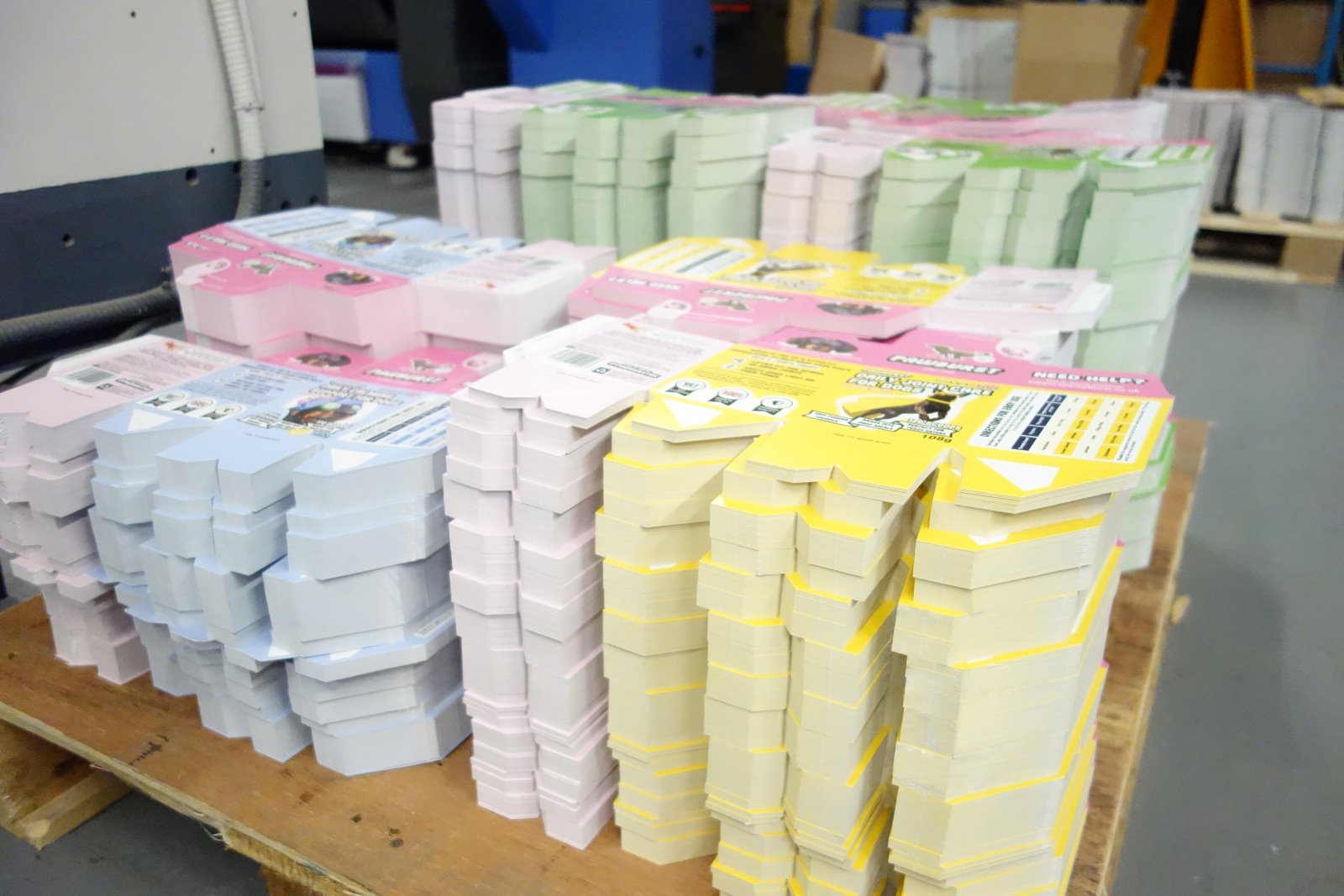
Used more than you might expect!
Die-cutting is a process we use extensively at Duraweld and on more products than you might expect.
From polypropylene ring binders and document boxes to paper wraps for presentation boxes, packaging components, inserts and specialist shaped parts, die cutting helps turn a flat sheet of material into something ready for the next stage of manufacture.
How Does Die Cutting Work?
Some components can be cut accurately with a guillotine. Straight-edged sheets, covers and simple rectangular parts are good examples. Once a design introduces curves, shaped edges, slots, apertures, tabs or more complicated fold lines, another approach is needed.
After the product has been designed and its dimensions agreed, a purpose-made cutting forme can be produced. The forme contains cutting and, where required, creasing rules positioned to match the finished design.
The platen machine is used to press the cutting forme, against the material, to cut the required component (or blank) in a single operation.
Every time the machine is set, the same shape can be reproduced efficiently and accurately again and again, which is perfect for production and repeat orders.
Why Is Die Cutting Useful for Bespoke Manufacturing?
The biggest advantage is that we are not restricted to straight edges or standard product shapes.
A bespoke design might need a shaped closing flap, rounded corners, finger cut-outs, fixing slots, locking tabs, windows or several folds that need to line up correctly when the finished product is assembled. A cutting forme can incorporate those features into one repeatable production process.
This is particularly useful for products such as:
Stationery & Presentation: polypropylene ring binders, folders, document boxes, sample and swatch products.
Packaging: presentation boxes, paper wraps, inserts, folding cartons and fluted mailer components.
Retail & Specialist Products: point-of-sale displays, shaped PVC components and other bespoke cut parts.
For production quantities, a dedicated cutting forme makes repeated cutting fast and efficient. For prototypes or very short runs, however, the cost of producing that tool can represent a significant proportion of the finished product price.
This is where digital cutting can offer a more economical route.
Testing Before Production
Before ordering a production cutting forme, there are situations where it makes sense to test the design first.
This is where our DYSS X9 digital cutting system becomes particularly useful.
Digital cutting works directly from the prepared CAD file, so there is no need to purchase a physical cutting forme simply to prove a design.
We mainly use this for three reasons:
- Product testing: checking that the size, shape, folds and construction work as intended.
- Pre-production samples: cutting the actual material required to produce a representative sample before the full order.
- Short runs: where the cost of dedicated tooling would add disproportionately to the price of each product.
For example, if a custom polypropylene box is only required in a quantity of ten units and the production cutting forme costs £100, that tooling alone adds £10 to the cost of every box. For the right project, digitally cutting the short run can make more sense.
Digital Cutting or Die Cutting?
Neither process replaces the other, they solve different manufacturing problems.
Digital cutting gives us flexibility when developing a new product, making samples or producing certain short runs because there is no dedicated cutting forme to purchase.
Once the design is approved and quantities increase, a purpose-made forme combined with platen production becomes a much faster and more efficient way of repeatedly producing the component.
In practice, a new bespoke product may therefore begin on the DYSS while it is being developed and tested, before moving to conventional die cutting for the full production run.
High-Speed Precision Die Cutting at Duraweld
For production quantities, the real advantage of die cutting is speed
Once the cutting forme has been fitted and the machine set, components can be cut and creased repeatedly at high speed. Rather than individually cutting each shape, the platen completes the required cuts and creases as part of a rapid repeating production cycle.
At Duraweld, this includes our Sanwa TRP-1060 automatic platen, used for precision die cutting and creasing across our manufacturing operation.
The combination of purpose-made tooling and automated platen production allows us to manufacture large numbers of components efficiently while maintaining the dimensions, cut positions and crease lines established during setup.
This is particularly important across three of our core manufacturing areas:
Polypropylene Products
Products such as polypropylene ring binders, folders and document boxes can start as a flat sheet of material.
The platen can cut the outside profile while also creating features such as slots, tabs, apertures and crease lines. Once cut, the blank is ready to move quickly to the next manufacturing stage.
Paper Over Board Products
Paper over board manufacturing also relies on accurately prepared components.
Printed paper wraps, board pieces and other elements need to be cut consistently so that they align correctly during case making, wrapping and assembly.
For repeat production, the platen allows these components to be produced quickly to the same established specification.
PVC Products
High-frequency welding remains the main manufacturing process behind many of our PVC products, but die-cut components can also form part of their construction.
Shaped board inserts and other components can be accurately produced before moving on to welding, assembly or finishing.
This is why die cutting is used far more widely across the Duraweld factory than the finished product might suggest.
Cutting and Creasing in One Process
Many of the products we manufacture need to be folded as well as cut.
A polypropylene binder, folding carton or document box, for example, needs its folds to occur in exactly the right position if the finished product is going to sit squarely and close correctly.
A cutting forme can incorporate both cutting and creasing rules, allowing the shape and its fold lines to be produced during the same platen operation.
The crease creates a controlled line along which the material can subsequently fold.
For us, that means the important dimensions are built into the tooling and can be reproduced throughout the production run, cut after cut, crease after crease.
Creasing Card and Fluted Board
 When working with card or fluted corrugated board, the cutting forme can also include creasing rules to create the fold lines needed for the finished product.
A creasing matrix is fitted to the platen and works with the creasing rule to form a controlled, accurately positioned channel in the board. This gives the material a much more clearly defined fold line, helping it bend where intended rather than crushing, cracking or folding unevenly. This is an essential process for premium product packaging.
The matrix profile is selected to suit the thickness and construction of the material. On solid card, it helps produce a sharper, cleaner fold. On fluted corrugated board, it helps control the compression of the fluting so the fold forms more accurately without unnecessarily damaging the surface or printed finish.
Good crease definition is especially important on products such as cartons, mailer boxes, inserts and folded presentation components, where the quality of the fold affects how squarely the product assembles, how well flaps and closures line up, and how consistent the finished item looks.
Because the cutting and creasing can be carried out in the same production operation, the required shape and fold lines are created together, improving both efficiency and repeatability across the production run.
One Process in a Much Bigger Manufacturing Journey
Die cutting is a good example of why even a relatively simple finished product can pass through several different areas of our factory.
A component might be:
designed → tested → printed → die-cut and creased → welded, wrapped or assembled → finished → quality checked → packed
Each process needs to work with the next.
A cut-out has to be in the right position. A crease needs to produce the correct finished depth. A shaped flap needs to meet its closure. Printed artwork needs to remain correctly aligned after the component has been cut. It is this combination of processes, rather than any one machine, that allows us to manufacture bespoke products consistently.
Need Something Made to a Bespoke Shape?
You do not need to know whether your product needs to be guillotined, digitally cut or die-cut before speaking to us.
Send us your specification, drawing, existing product or even an initial idea and our team can work out the most practical way to manufacture it.
For a new design, that may mean testing it digitally first. For an established product or larger production run, a purpose-made cutting forme may be the more economical route.
Either way, the aim is the same: to find a practical manufacturing solution that gives you the product you need and repeatable results when you need it again.

British made since 1959

Free delivery

Eco-friendly solutions
