Foil Blocking vs Print
Choosing the Right Finish
Foil blocking and print can create very different results on a ring binder. The best choice depends on the artwork, the material and whether you want a bold full-colour design or something cleaner and more understated.
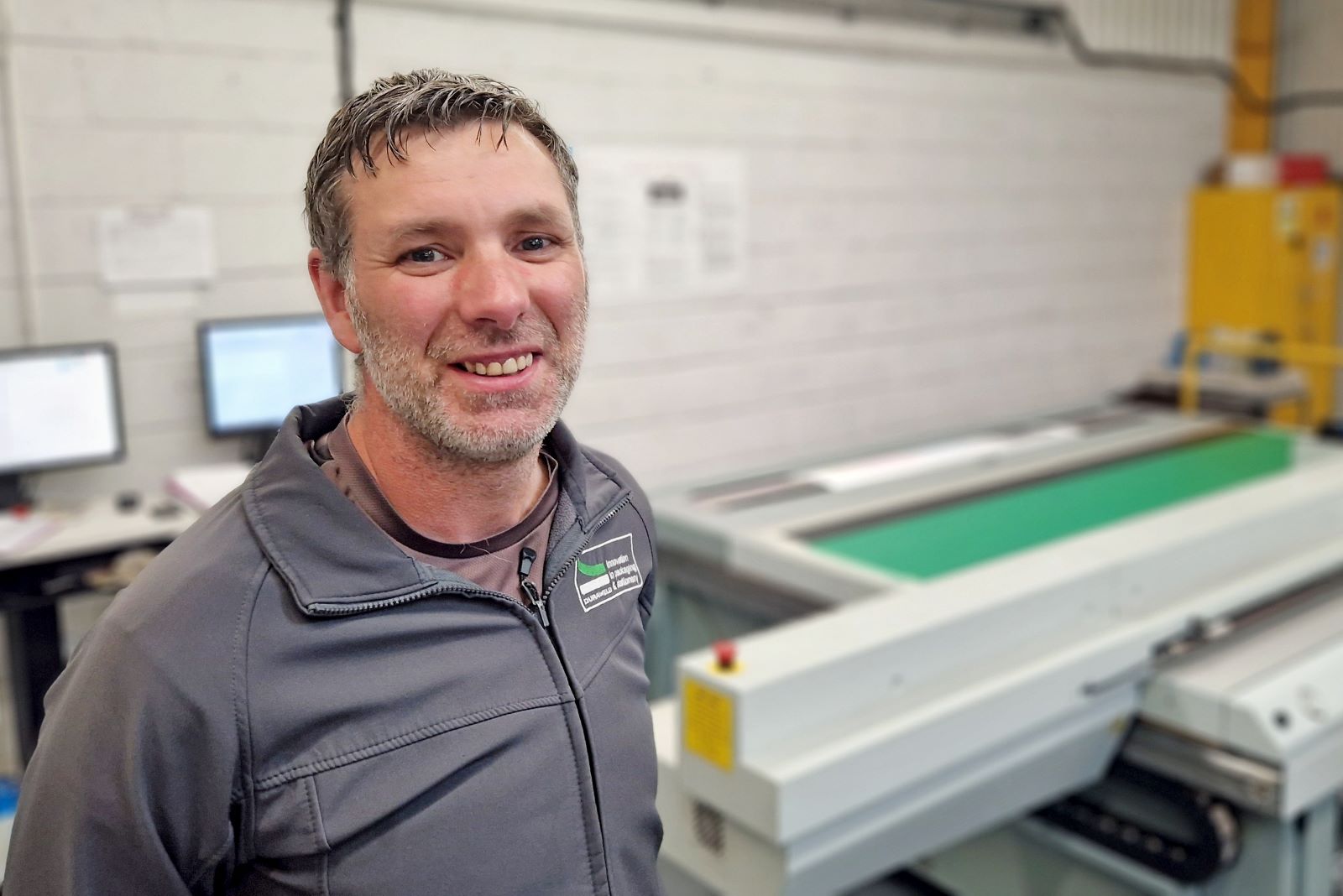
We asked our Print Supervisor, Andy, how he would approach the decision
Choosing the Right Finish for Your Ring Binder
When you are creating a branded ring binder, the finish can make just as much difference as the material itself.
Full-colour print gives you a huge amount of creative freedom, while foil blocking offers a simpler, more understated way to make branding stand out.
Neither is automatically better. It comes down to the artwork, the binder material and the kind of finish you want to achieve.
It Depends on What You Want the Binder to Do
The simplest way to think about the difference is:
“Print gives you colour and creative freedom. Foil blocking gives you impact and a premium finish.”
If your artwork includes photographs, illustrations, gradients or several colours, print will usually give you much more flexibility.
Foil blocking takes a different approach. Rather than covering the binder with artwork, it is generally used to highlight individual elements such as a logo, company name or title.
And sometimes, less really is more.
A simple foil-blocked logo on a quality binder can create a very clean, professional result without needing a complicated design.
So rather than asking which process is better, it is more useful to look at where each one makes the most sense.
What Is Foil Blocking?
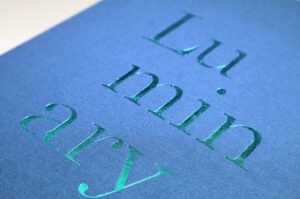
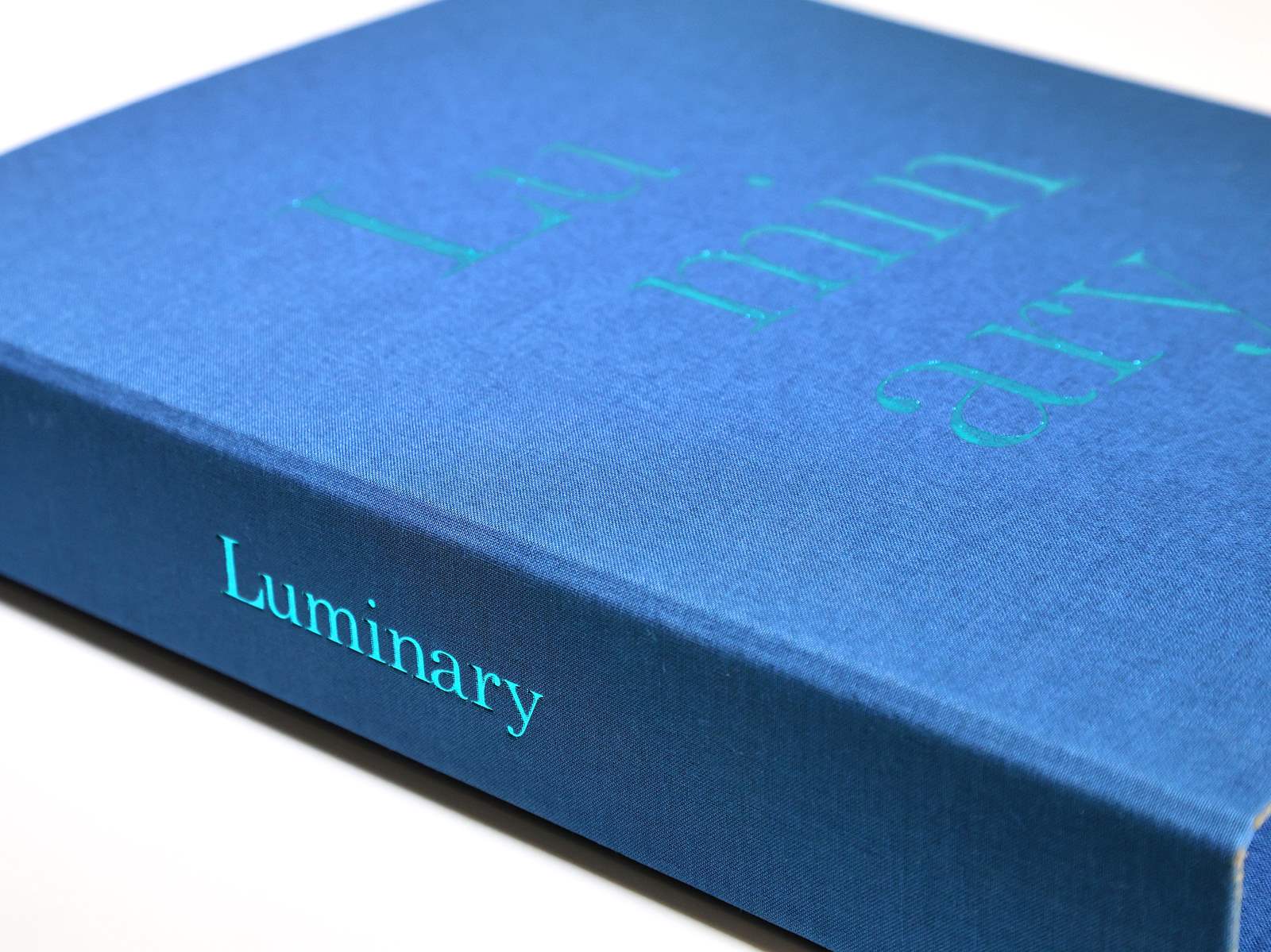
Foil blocking is a finishing process where a metallic or coloured foil is applied to the surface of the binder using heat and pressure.
Gold and silver are probably the finishes most people immediately associate with foil blocking, but there are many other colours and effects available.
It can be used for:
Logos
Company names
Binder titles
Simple graphics
Patterns and decorative details
The foil catches the light differently from conventional print, helping the finished design stand out without needing a large amount of artwork.
When Foil Blocking Makes More Sense
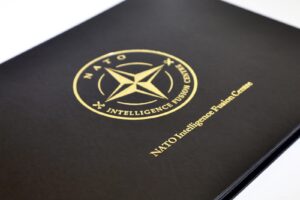
Foil blocking works particularly well when the design itself is relatively simple.
“Sometimes your logo, company name and a little bit of breathing room are all that’s needed.”
On a coloured PVC binder, the material can do much of the visual work already.
A black PVC binder with a silver foil logo.
A navy binder with gold foil.
A bright red binder with a contrasting foil.
The possibilities are surprisingly broad. This can be particularly effective for businesses where presentation matters, such as legal firms, financial services, property companies, luxury brands and professional organisations.
PVC is also well suited to other finishing options, including embossing, so foil blocking can be combined with other techniques where a more distinctive result is required.
When Print Gives You More Freedom
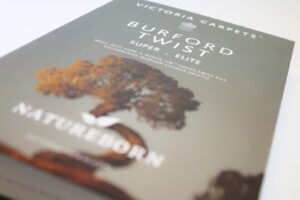
If the artwork contains photography, detailed graphics, gradients or several brand colours, print will usually be the better route.
“If the artwork is doing a lot of the talking, print gives you far more freedom.”
Print is particularly useful where you need:
Photographs or detailed artwork
Several colours
A full wraparound design
Gradients or complex graphics
Large amounts of information
Strong promotional or campaign branding
Paper-over-board ring binders are especially well suited to this type of application because the outer sheet can be printed in full colour and wrapped around the front cover, spine and back.
That gives you a much larger canvas to work with and makes POB a strong option where the printed design is a major part of the finished product.
What About Coloured PVC?
This is one of the areas where foil blocking really comes into its own.
PVC ring binders are available in a wide range of colours, so the material itself can form the background of the design.
Rather than covering the binder with print, a carefully positioned foil logo or title can become the focal point.
“If the binder colour is already doing part of the work, you do not always need to print over the whole surface.”
This approach can create a very clean result and can be especially effective where the brief calls for something smart, professional and understated.
Can You Use Foil Blocking on Paper Over Board?
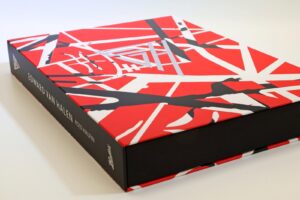
Yes. Foil blocking is not limited to PVC.
A paper-over-board binder can have a full-colour printed outer and then use foil blocking to pick out a particular element, such as a logo, title or key piece of branding.
This can be a very effective combination.
“You do not necessarily have to choose between print and foil. A printed cover with a foil-blocked logo can work really well.”
You get the creative freedom of full-colour print, while the foil adds another layer of detail and contrast.
Paper-over-board can also be finished with matt, gloss, anti-scuff or soft-touch laminates depending on the appearance and level of protection required.
PVC or Paper Over Board?
The material and finish should really be considered together.
PVC is a practical option where durability, regular handling and a wipe-clean surface are important. It also works particularly well when you want to use the colour of the vinyl itself as part of a simple branded design.
Paper over board gives you much more scope for detailed, full-cover artwork and is often selected where presentation and print quality are higher priorities.
So rather than deciding on print or foil in isolation, it is worth looking at the whole specification.
Foil Blocking vs Print at a Glance
| Consideration | Foil Blocking | Full-Colour Print |
|---|---|---|
| Best for | Logos, titles and simple branding | Detailed artwork, photography and full-cover designs |
| Visual style | Clean, understated and premium | Colourful, flexible and highly creative |
| Colour | Metallic, coloured and specialist foils | Full-colour artwork and gradients |
| PVC suitability | Particularly effective on coloured PVC | Suitable for direct print or other printed approaches |
| POB suitability | Excellent as an added finishing detail | Ideal for full wraparound artwork |
| Design complexity | Best for simpler elements | Better for complex graphics |
| Can be combined? | Yes | Yes |
| Typical use | Professional, luxury and understated branding | Marketing, promotional and presentation-led designs |
Which Finish Should You Choose?
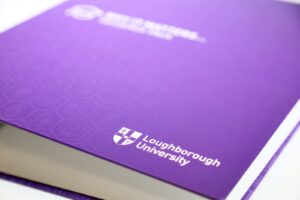
There is no single right answer.
The best starting point is to think about what needs to appear on the binder, how prominent you want the branding to be and the environment in which the finished product will be used.
“Choose the finish that suits the design, rather than trying to make the design fit the finish.”
At Duraweld, we manufacture bespoke ring binders with a wide range of printing and finishing options available. If you are unsure whether print, foil blocking or a combination of the two will work best, our team can talk through the options and help you choose a finish that suits the project.

British made since 1959

Free delivery

Eco-friendly solutions
